
How Do Porta Potties Work?
There's no mystery to it. The unit sits on flat ground, the tank underneath holds waste, and a blue chemical solution manages odor and starts breaking things down chemically until the next pump-out. That's the whole diagram: seat, tank, chemical, vent stack. A standard unit runs about 44 by 48 inches on the ground and stands roughly 92 inches tall, which is why placement matters more than people think. Check the porta potty placement guide before delivery day, especially if the ground slopes or the crew needs a straight shot from a construction worker running to porta-potty stations between shifts. Georgetown Porta Pros trucks vacuum the tank, rinse it, and recharge the chemical fill during each visit. That's the service cycle ANSI/PSAI Z4.3 describes as a baseline: one visit per week covers up to 10 users over a 40 hour week. Busier jobsites or weddings need more frequent stops, which is a conversation to have before you book, not after the smell shows up. If you're deciding between a standard porta potty rental and something nicer, the mechanics underneath are the same. Only the finish level changes.
How Does a Portable Sink Work?
A portable sink runs on a fresh water tank, a foot pump or a battery pump, and a gray water tank underneath to catch what drains out. No plumbing, no hose bib required. Fill the fresh tank, and the pump pushes water through the faucet; used water collects below instead of running onto the ground. Soap sits in a built-in dispenser, and OSHA's washing standard at 29 CFR 1910.141(d)(2) requires soap and towels or a hand-drying device at any handwashing station. A bottle of hand sanitizer bolted to a fence post does not satisfy that. Construction sites in Georgetown pair these with portable toilet rentals to meet the intent of OSHA 1926.51(c), which sets toilet ratios by crew size: one facility for 20 workers or fewer, then more per worker as the headcount climbs. If your work involves applying paints, coatings, herbicides or insecticides, OSHA 1926.51(f)(1) specifically requires washing facilities for that contaminant exposure. Browse the handwashing station rental options or the portable sink rental page directly if you're scoping a jobsite in Georgetown or nearby Serenada, 5.1 miles north.
How Do Flushable Porta Potties Work?
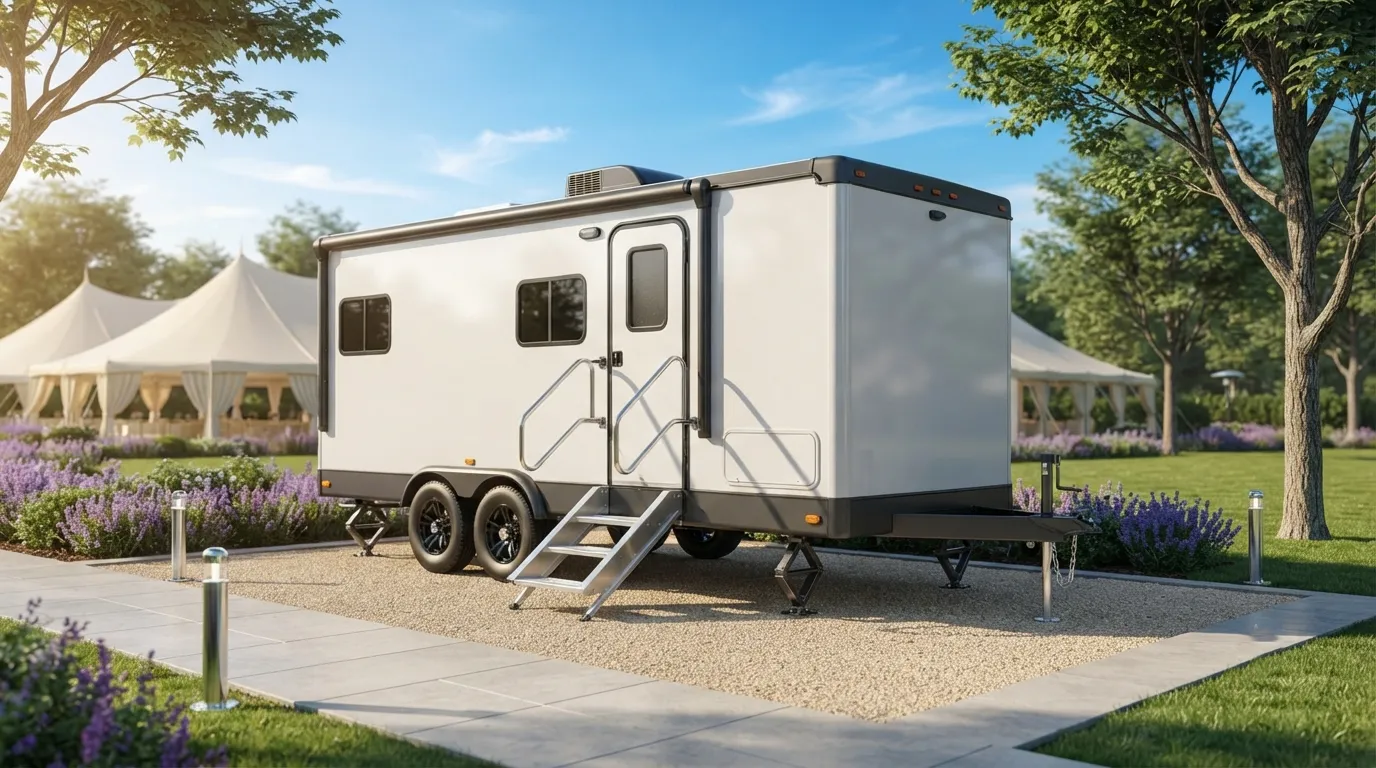
A flushable unit adds a small onboard freshwater tank and a foot pedal or hand pump that pushes a measured rinse into the bowl, flushing waste into the holding tank below, similar to an RV toilet. It still isn't tied into a sewer line. The upgrade is comfort, not plumbing: less residual odor, a cleaner bowl between uses, and often a sink built into the same unit. That's what separates a deluxe flushable porta potty from a standard unit, and it's why weddings and corporate events in Georgetown tend to book deluxe over standard. The holding tank capacity doesn't change much, so service frequency still follows the same math as a standard unit. If you're weighing the upgrade against a full trailer, compare it against a restroom trailer rental, which runs multiple stalls off a larger built-in tank system and fresh water supply, more like a small building than a box. For camping trips, the same flush mechanism shows up in towable units, which is how camping porta potties work when a campsite has no hookups at all: same tank-and-chemical logic, just built for towing.
Why Do Porta Potties Need Chemicals?
Porta potties need chemicals to control odor and start breaking down waste solids before the tank gets pumped. The blue liquid you see is a deodorizer and biocide blend; it isn't a cleaning agent for the outside of the unit. People sometimes search for portable toilet chemicals near me expecting to refill their own unit, but on a rental, that's the provider's job, done at every service stop. Septic tank cleaning chemicals are a different product entirely, meant for a fixed 1,000 gallon or larger residential tank, not a portable unit, and pouring the wrong chemical into either system can cause real problems downstream. If your property runs on a septic system rather than rentals, a residential tank typically needs pumping every 3 to 5 years depending on tank size and household size. Georgetown Porta Pros handles both sides of that under septic pumping service and septic tank cleaning, and if your tank is showing signs of trouble, the septic tank warning signs page walks through what to watch for before it turns into an emergency call.
How much does a porta potty rental cost in Georgetown?
Standard units typically run in the $100 to $350 per day range depending on duration and delivery distance. Weekly and monthly rentals bring the daily cost down. Full detail, including how delivery fees stack on top, sits on the porta potty rental cost page.
Do I need a permit for a porta potty in Georgetown?
Placement in the public right of way needs confirming with the city before delivery. Rules vary by lot and by how close the unit sits to a sidewalk or street. Check the porta potty permit requirements page, and we can help confirm before your date.
How many porta potties does my jobsite need?
It depends on crew size and duration, following the ratios in OSHA 1926.51(c). A 15-person crew on a short job may need only one unit; larger or longer jobs need more. Use the how many porta potties do I need guide for a real headcount.
Are porta potties wheelchair accessible?
Only ADA units are, and ADA Standards section 304.3.1 requires a 60 inch turning circle inside. Standard units don't meet that. See ADA accessible porta potty for specs and ADA restroom requirements for the full standard.
Do porta potties smell bad?
Not when serviced on schedule. Odor control depends on the chemical fill and pump-out frequency, roughly weekly under ANSI/PSAI Z4.3 for moderate use. Heavier use needs more visits. Details on service intervals are on how often are porta potties cleaned.
Next step
Get a delivery date
Tell us the address, the dates and the headcount. We size the order and confirm the route.