
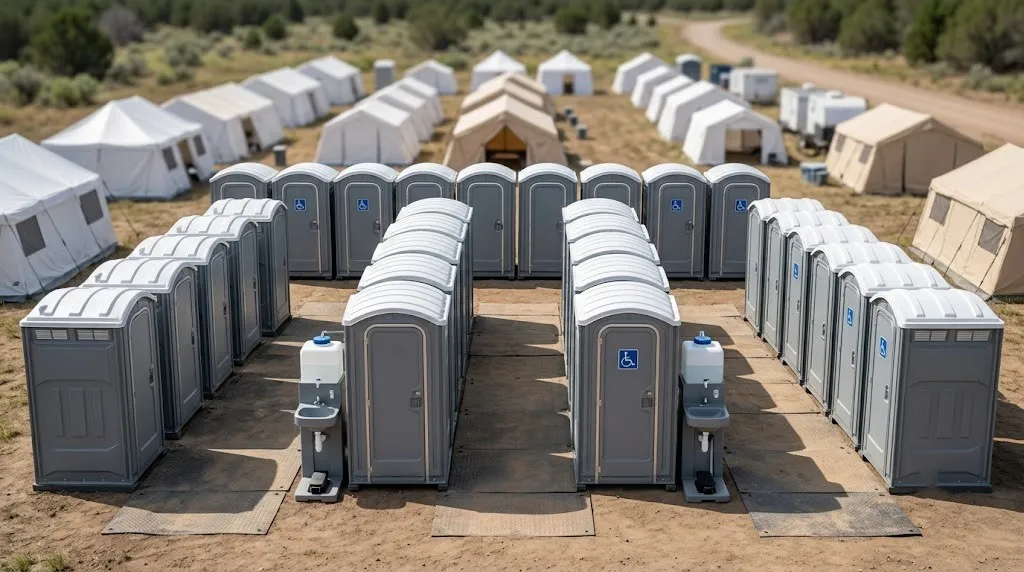
How fast can you deploy after a disaster in Georgetown?
Speed depends on road access and how many units the situation needs. A single standard unit or a handwashing station rental can often go out same day once we confirm a safe placement spot, and emergency porta potty rental is built around exactly that kind of short-notice call. Larger jobs, like a shelter standing up at a community building or a staging area for utility crews, take more coordination because we are matching unit count to headcount and to how long the deployment might run. For crews and displaced households without power or water, we lean on OSHA 1926.51(a)(1), which calls for an adequate supply of potable water at any place of employment, and that same logic applies to relief operations staffing volunteers and responders. If the event knocks out plumbing across a wider stretch of Williamson County, our service areas page covers how we stage between Georgetown and towns like Liberty Hill, 16.3 miles west, or Hutto, 16.5 miles southeast, so equipment can shift where the need is worst. We also stock portable sinks and hand sanitizer stations for sites where a full plumbed station is not practical yet.
What kind of sanitation does a disaster site actually need?
It depends on whether you are sheltering people, housing a work crew, or both. A shelter running for days needs a toilet count that scales with occupancy the same way a construction site does under OSHA 1926.51(c), which sets 1 toilet for 20 workers or fewer and adds fixtures as headcount rises past 20 and again past 200. That standard was written for jobsites, but relief managers use the same ratio logic to avoid long lines at 2 a.m. For anyone with a mobility limitation, ADA Standards section 213.2 requires that at least 5 percent of a cluster of single-user units be accessible, and never fewer than one, so our ADA accessible porta potty option gets built into shelter plans from the start, not added later. Handwashing matters just as much as toilets. 29 CFR 1910.141(d)2) requires soap and towels or a hand-drying device at wash stations, and hand sanitizer alone does not meet that. If crews are also running septic systems that were compromised by flooding, our septic pumping service and emergency septic service handle overwhelmed tanks before they back up into a shelter or a home. A flooded 1,000-gallon residential tank that would normally get pumped every 3 to 5 years may need attention immediately after a storm, regardless of schedule.
Where should units go during an active disaster response?
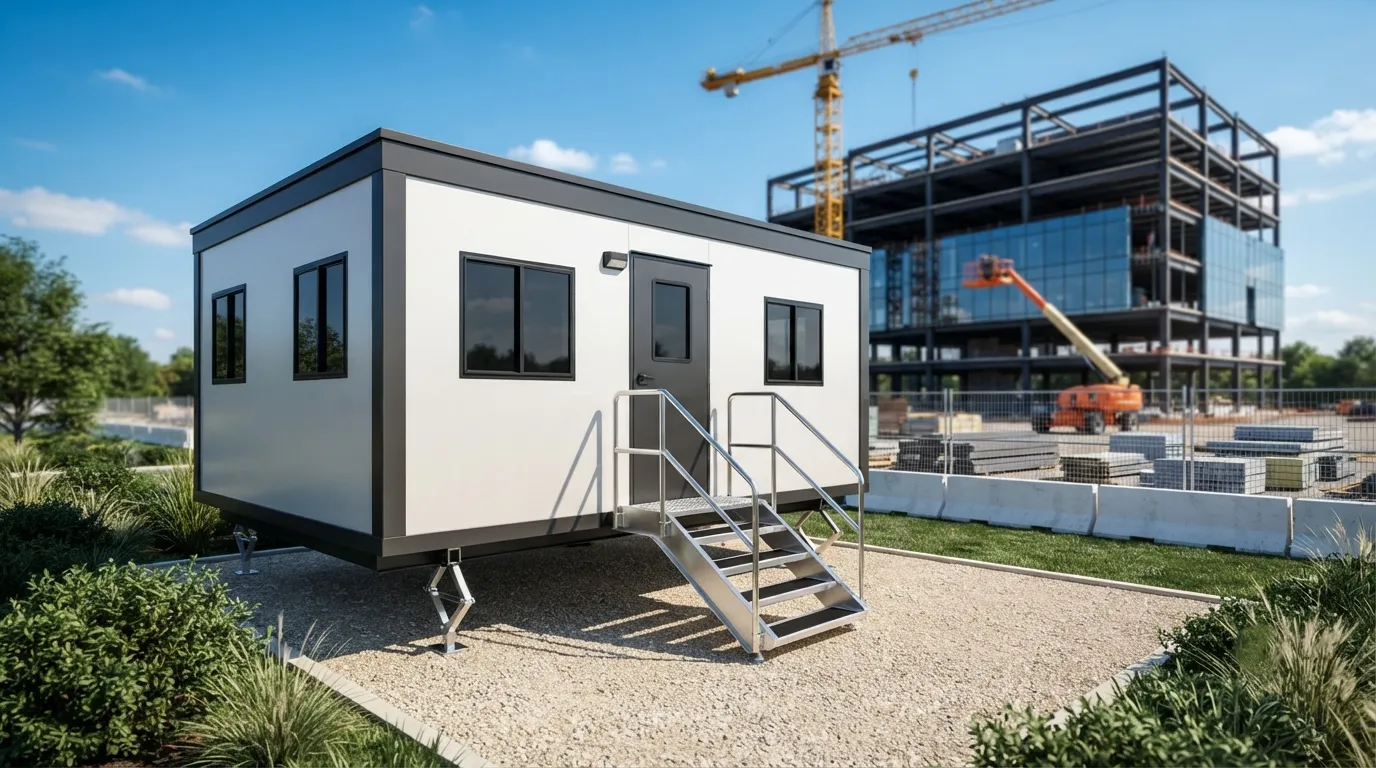
Placement has to balance access for service trucks against keeping people away from hazards like downed lines or debris piles. Our porta potty placement guide covers stable, level ground and clearance for pump trucks, and that still applies under emergency conditions, maybe more so, because a truck that cannot get in cannot service the unit later. ADA Standards section 302.1 requires the ground surface under and around an accessible unit to be stable, firm and slip resistant, which matters on saturated or muddy disaster sites. If the response calls for staging a larger footprint, a temporary fence rental or crowd control barrier rental keeps foot traffic organized around a distribution point or shelter entrance. Storage matters too. Relief supplies, generators and tools often need secure space, and a storage container rental or mobile office trailer rental can double as a command point. For overnight lighting where power is out, a light tower rental or temporary power pole keeps a site workable after dark. Georgetown sits close enough to Serenada, 5.1 miles north, and Santa Rita Ranch, 13.6 miles west, that equipment can reposition within the same operational day if a response shifts location.
| unit | day | week | month |
|---|---|---|---|
| standard | $100-$350 | $130-$500 | $125-$325 |
| ada | $200-$400 | $200-$400 | - |
| delivery_fee | $100-$500 | $100-$150 | $120-$420 |
How many toilets does a shelter or relief site need?
It depends on headcount and how long the site runs, similar to the ratio logic in OSHA 1926.51(c). Use our how many porta potties do I need guide as a starting point, then call so we can adjust for a shelter's actual population and hours of operation.
Can you deliver during active flooding or road closures?
We will try, but road access decides everything. If routes into a Georgetown neighborhood are closed, we stage units at the nearest reachable point and move them in once crews clear the way. Call Georgetown Porta Pros directly for real-time routing.
Do disaster sites need ADA accessible units?
Yes, when units are clustered for shelter or public use. ADA Standards section 213.2 requires at least 5 percent of a cluster be accessible, never fewer than one. Our ADA restroom requirements page walks through what that looks like on site.
What if our septic system failed during the storm?
Flooding can overwhelm a tank well before its normal 3 to 5 year pumping cycle. Our emergency septic service responds to failures fast, and septic tank warning signs helps you spot trouble before it becomes a backup.
Can you supply handwashing stations without running water?
Yes. Our handwashing station rental units carry their own water supply and meet the soap-and-towel requirement under 29 CFR 1910.141(d)(2), since sanitizer alone is not a substitute for actual handwashing.
Next step
Get a delivery date
Tell us the address, the dates and the headcount. We size the order and confirm the route.