
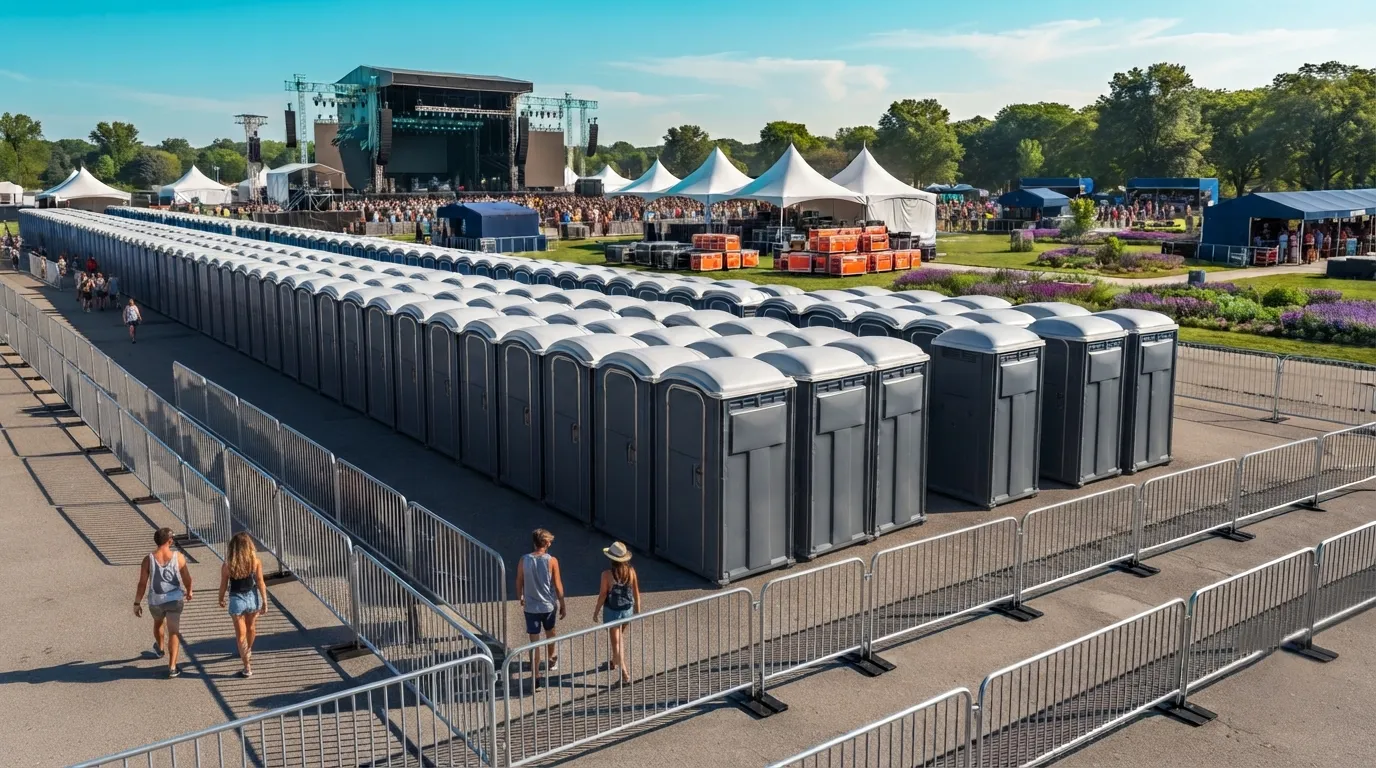
How many restrooms does a festival need in Georgetown?
Start with headcount, then work backward. A one-day festival crowd usually needs a toilet for every 50 to 65 attendees, and that number climbs fast once alcohol sales open, because drink lines mean bathroom lines. If you are not sure where to start, the porta potty rental planning guide and the how many porta potties do I need calculator both walk through headcount math specific to single-day crowds. Georgetown Porta Pros builds most festival orders around standard porta potty rental units, then adds deluxe flushable porta potty options near VIP areas or beer gardens where people expect something nicer.
ADA Standards section 213.2 requires that where single-user units are clustered, at least 5 percent of them be accessible, and never fewer than one. That means even a modest 10-unit bank needs an ADA accessible porta potty on site, not tacked onto a back corner. ADA Standards section 304.3.1 calls for a 60 inch turning circle in front of the unit, and ADA Standards section 403.5.1 sets a 36 inch minimum path width, so the accessible unit needs real clearance, not a patch of mud behind a fence post. For festivals with a main stage and a food court running at the same time, spreading restrooms across both zones cuts walk time more than adding units to one bank. The festival restroom rental approach we use in Georgetown treats each activity zone as its own mini-event with its own toilet count, then totals it up.
What does a festival restroom rental cost in Georgetown?
Pricing depends on unit type and how long the event runs, and festivals almost always fall into an event-rate bucket rather than a straight daily rate.
| Unit | Day | Week | Event Rate |
|---|---|---|---|
| Standard unit | $100 - $350 | $130 - $500 | $200 - $800 |
| ADA unit | $200 - $400 | $240 - $240 | - |
| Deluxe flushable | $85 - $1,200 | $150 - $290 | - |
Delivery runs $100 to $500 for a single day, and most multi-day festivals pay a service fee on top for mid-event servicing, which typically lands between $100 and $300 a day. If your festival runs Friday through Sunday, ask about weekend service intervals rather than paying for three separate daily visits. Full cost breakdowns, including how delivery and service fees stack against unit rental, live on the porta potty rental cost and porta potty rental per day pages. If your event runs longer than a weekend, the monthly porta potty rental page has separate pricing logic worth comparing against event-day rates.
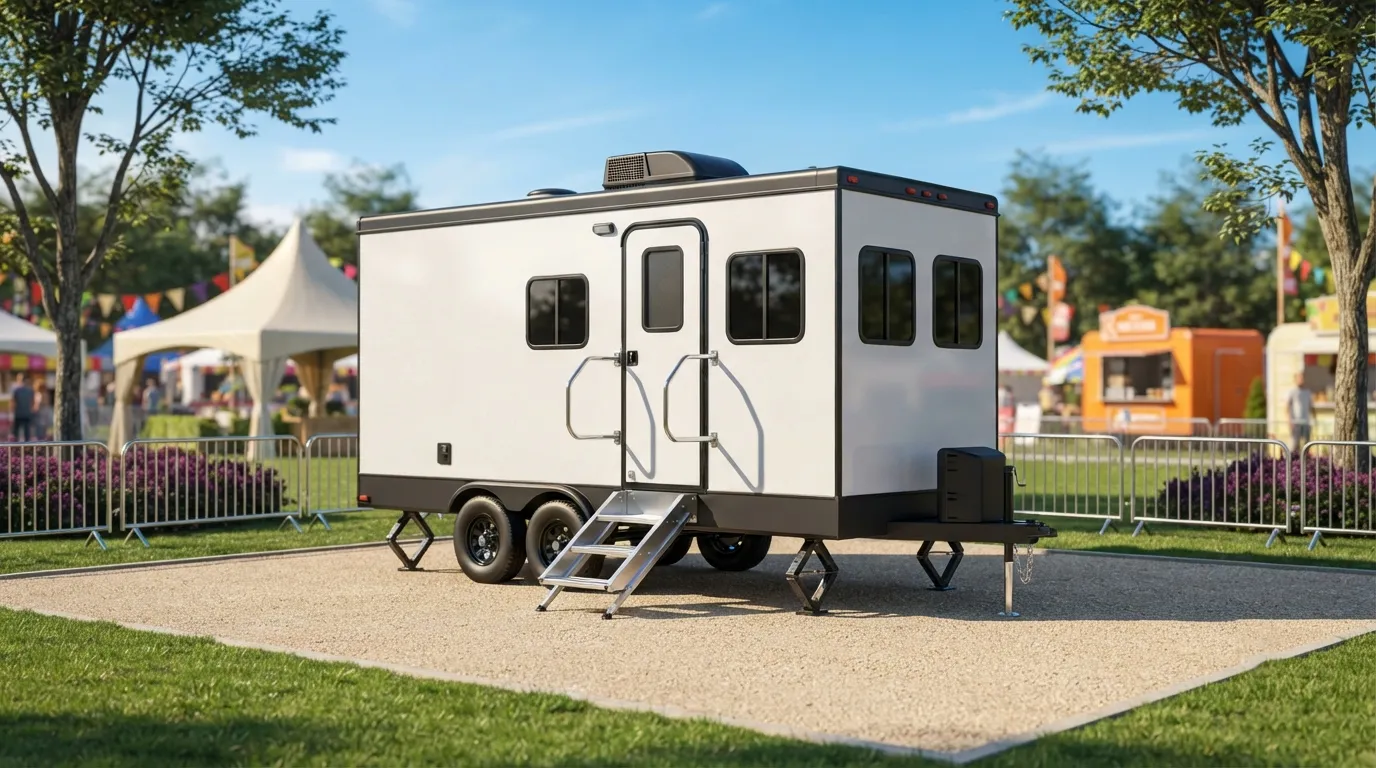
Bigger festivals sometimes skip individual units entirely and rent a restroom trailer rental instead. A 4 stall restroom trailer or 8 stall restroom trailer handles heavier foot traffic with less line congestion than a bank of standalone units, and a trailer rents for $2,499 to $3,899 for a full event under our measured data. For a festival with a beer garden and a main stage running concurrent programming, that trade-off is worth pricing out on the restroom trailer rental cost page before you commit to either format.
Why do festivals need handwashing stations, not just toilets?
Because 29 CFR 1910.141(d)(2) requires washing facilities stocked with soap and towels or a hand-drying device, and hand sanitizer alone does not satisfy that. Food vendors, especially, need real handwashing access nearby, and a handwashing station rental placed at the food court entrance covers that requirement without forcing vendors to walk to the restroom bank. A portable sink rental works well for smaller vendor rows, while hand sanitizer station rental units are a reasonable supplement near high-traffic gates but should not be your only washing option per vendor tent.
Festivals in Georgetown also need to think about site logistics beyond the toilets themselves. A temporary fence rental defines the event perimeter and keeps foot traffic funneled toward marked entrances, and crowd control barrier rental works well for queue lines at the restroom bank itself. If the festival runs into evening hours, a light tower rental near the restroom area matters more than organizers expect, since OSHA 1926.56(a) sets minimum illumination intensities for work areas and the same logic applies to keeping guests safe after dark. Trash service matters too. A roll-off dumpster rental placed near the food court keeps debris from piling up around the restroom bank, which is usually the first place festival trash accumulates.
How far in advance should I book festival restrooms in Georgetown?
Book as soon as your date and headcount are set, ideally 4 to 6 weeks out for anything over 500 guests. Georgetown fills up fast on weekends with overlapping events, and trailer units especially get reserved early since there are fewer of them.
Do festival restrooms need to be serviced during a multi-day event?
Yes, almost always. ANSI/PSAI Z4.3 sets a baseline of one service visit per week for up to 10 users over a 40 hour stretch, but festival crowds exceed that fast, so multi-day events typically get serviced daily or every other day.
Can I mix standard units and a restroom trailer at one festival?
Yes, and it is common. Standard units handle general grounds traffic while a trailer covers VIP areas or a beer garden. Georgetown Porta Pros lays out both types on one site map so foot traffic does not bottleneck at either location.
What happens if a festival restroom runs low on supplies mid-event?
Call for an emergency reroute. Georgetown Porta Pros keeps service trucks on standby during large festivals, and the emergency porta potty rental line handles same-day restocks or added units if headcount runs over your original estimate.
Are festival restrooms different from what I'd rent for a wedding?
Mostly in scale and finish level. Wedding orders lean toward wedding restroom rental trailers with nicer interiors, while festivals prioritize throughput and durability across a full weekend, closer to what concert restroom rental and marathon and race restrooms orders typically need.
Next step
Get a delivery date
Tell us the address, the dates and the headcount. We size the order and confirm the route.