
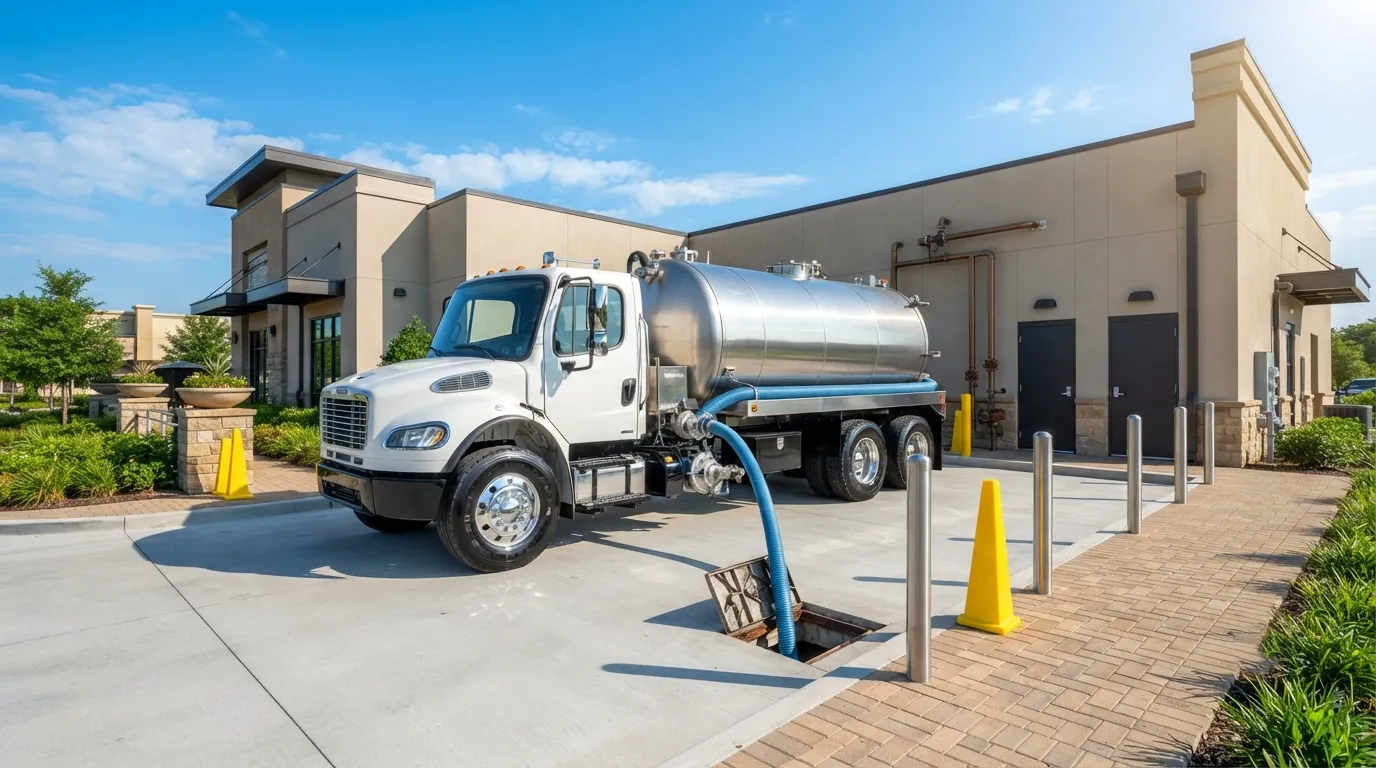
How Often Does a Grease Trap Need Pumping?
The honest answer: it depends on the trap size and how much fryer volume your kitchen runs. That 25 percent fats-oils-grease-and-solids threshold is the real trigger, not a date on a calendar. A small cafe near I-35 might stretch to 8 weeks between visits, similar to how a septic tank cleaning schedule stretches out for a low-volume household. A busy line at a Georgetown barbecue joint might need grease trap pumping service every 3 to 4 weeks. Georgetown Porta Pros checks trap depth at each visit and builds a schedule around your actual load instead of guessing. That is different math from a residential septic tank, which is typically pumped every 3 to 5 years based on tank size and household size, a topic covered in more depth on the septic tank warning signs page. If you are not sure which category your setup falls into, the septic pumping service page breaks down tanks versus traps, and how often to pump a septic tank covers the household side if you also manage a property with a house on septic.
What Does Grease Trap Pumping Cost?
Pricing depends on trap size, grease load and how far out the site sits, but septic-category service work in this market runs in bands you can plan around, similar to how porta potty rental cost varies by job scope.
| service | duration | low | typical | high |
|---|---|---|---|---|
| septic pumping visit | day | 150 | 250 | 300 |
| septic pumping visit | weekend | 50 | 100 | 150 |
A standalone service call fee, separate from the pump-out itself, typically runs 100 to 300 dollars depending on scope. Emergency grease trap pumping near me searches usually come from a kitchen that is already backed up, and same-day work can carry a premium over a scheduled weekday visit. For a full cost breakdown across septic and holding tank work, see septic tank pumping cost, and for restroom budgeting on the same job site, check porta potty rental per day or monthly porta potty rental. If your kitchen also needs a stopgap while the trap gets serviced, a holding tank rental can bridge the gap.
Do You Offer Emergency Grease Trap Pumping Near Me?
Yes. A grease trap that is not pumped on schedule backs up fast, and a backed-up trap can shut down a kitchen mid-shift. Georgetown Porta Pros dispatches emergency grease trap pumping service across Georgetown and can reach nearby towns too: porta potty rental in Serenada sits 5.1 miles north, and porta potty rental in Hutto is 16.5 miles southeast, both within normal response range. For sites further out, porta potty rental in Liberty Hill is 16.3 miles west and porta potty rental in Taylor is 23.8 miles southeast, and crews near Santa Rita Ranch can check porta potty rental in Santa Rita Ranch for coverage too. If your grease trap trouble is tied to a broader plumbing issue, emergency septic service covers the wider category. Warning signs worth watching are covered on septic tank warning signs, and several apply to grease traps too: slow drains, gurgling, and a sour smell near the kitchen floor drain.
Commercial kitchens in Georgetown that skip regular pumping also risk violating local discharge rules tied to city wastewater code, so staying ahead of the 25 percent threshold protects more than just your drain line. Restaurants running events or temporary kitchens should also look at portable restroom rental, handwashing station rental and portable sink rental if a job site or pop-up kitchen needs sanitation beyond the grease trap itself, and larger events may want a full restroom trailer rental. Construction crews building out a new kitchen space often need construction site services, a roll-off dumpster rental for debris, a temporary fence rental around the work zone, and a storage container rental for tools before the grease trap ever goes into service.
How do I know if my grease trap is too small?
If it needs pumping every 2 to 3 weeks despite normal volume, the trap is likely undersized for your kitchen output, much like a job site that is under-served ends up needing the guidance on how many porta potties do I need. A properly sized trap on a normal-volume kitchen should hold closer to the 4 to 8 week range before hitting that 25 percent threshold.
Can I pump my own grease trap?
Technically possible with the right vacuum equipment, but most Georgetown restaurants contract it out. Improper disposal of grease waste creates liability, and a licensed service documents the pump-out for health department records.
What happens to the grease after pumping?
It gets hauled off and disposed of or recycled through a licensed facility, never dumped on-site or down another drain. Georgetown Porta Pros handles transport and disposal as part of the service call, the same crew that answers questions on the FAQ page or through request a quote.
Does a grease trap smell if it is overdue?
Yes, and it is usually the first sign. A sour, rotting-food odor near floor drains or the trap lid means you are past due and should schedule service before it backs up.
Is grease trap pumping different from septic pumping?
Related but distinct. A grease trap catches fats and oils from kitchen drains; a septic tank handles broader wastewater. Both get pumped by vacuum truck, but on very different schedules and thresholds, and the contact page or the about page can point you to the right service if you are still unsure which one you need.
Next step
Get a delivery date
Tell us the address, the dates and the headcount. We size the order and confirm the route.